
Presentation of the Programme
The Major Research Programmes are an initiative of Université PSL designed to foster ambitious, high-impact research across its academic community. Fourteen Major Research Programs, including ChemCellState, were selected, representing a total investment of over €36 million fully dedicated to research. Funded over five years, these programs promote structuring intra-PSL collaborations, strong interdisciplinarity, international visibility, and academic excellence, while addressing key scientific, artistic, social, and strategic challenges of the future.
Scientific programme
ChemCellState brings together the forefront of organic and inorganic chemical biology to tackle one of the most compelling questions in modern biology: how do cells transition between distinct functional states, and how can we control these processes for therapeutic benefit? Chemical biology combines the principles of chemistry with the complexity of living systems, enabling the dissection of cellular processes at molecular resolution. By leveraging this approach, ChemCellState aims to uncover the molecular mechanisms driving cell state transitions, with implications for cancer, infectious and inflammatory diseases, and ageing.
ChemCellState focuses on the concept of cell plasticity—the ability of cells to adopt distinct states independently of genetic changes. While mutations can initiate disease, it is often the adaptive capacity of cells that drives therapy resistance in cancer or enables bacterial survival under stress. Understanding these processes at the molecular level is critical for developing next-generation therapies. Recent breakthroughs from PSL university researchers have revealed key roles for metal cations, lipids, glycans, and other biomolecules in regulating cell states, raising fundamental questions about how these components can be harnessed to control cell behavior.
The programme is organized into four interconnected axes, each addressing complementary aspects of cell state biology:
- Molecular Mechanisms of Biological Systems: investigating how proteins, glycans, and metal cations orchestrate cellular transitions across diverse biological contexts, including cancer metastasis, bacterial adaptation, and inflammation.
- Chemogenetic Approaches for Sensing and Controlling Cell State: developing molecular tools, sensors, and actuators to observe and manipulate cell states with high spatial and temporal precision.
- Molecular Probes & Therapeutics: designing probes to characterize cellular vulnerabilities and creating novel drug candidates targeting specific cell states.
- Physico-Chemical Methods & Computational Modelling: applying advanced imaging, metallomics, and computational approaches to quantify and predict biological behaviours at multiple scales.
In the context of PSL university, which brings together numerous teams investigating the role of metals in biology, ChemCellState places a particular and original emphasis on the role of metal-based systems in regulating these processes.
By integrating expertise from 24 research teams, and almost one hundred researchers across chemistry, biology, biophysics, and computational sciences, ChemCellState is uniquely positioned to deliver transformative insights into cellular plasticity. The programme not only aims to advance fundamental understanding but also to provide the foundations for innovative therapeutic strategies, reinforcing PSL University’s standing as a global hub for organic and inorganic chemical biology research.
Scientific coordinators
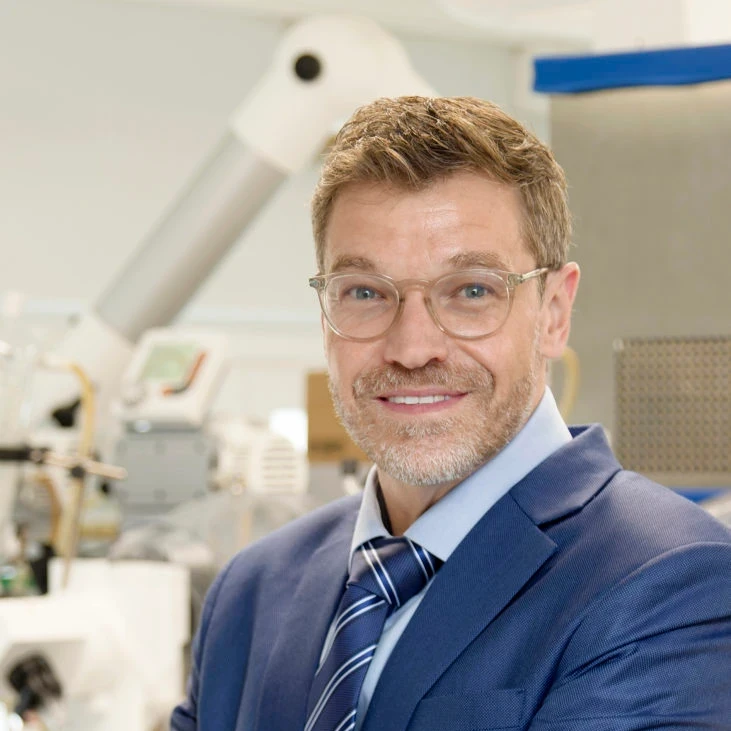
Professor
Chimie ParisTech - PSL

Professor
ENS - PSL

Research director
Institut Curie - CNRS
Members
ChemCellState is composed of 24 teams from 6 different institutions.