
Mapping of Cellular Redox State
About the project
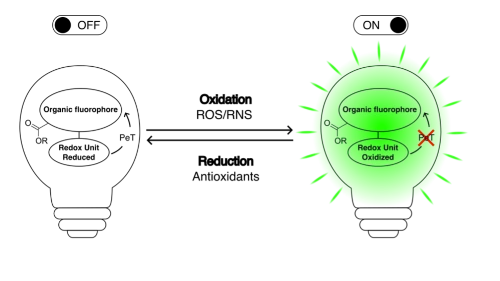
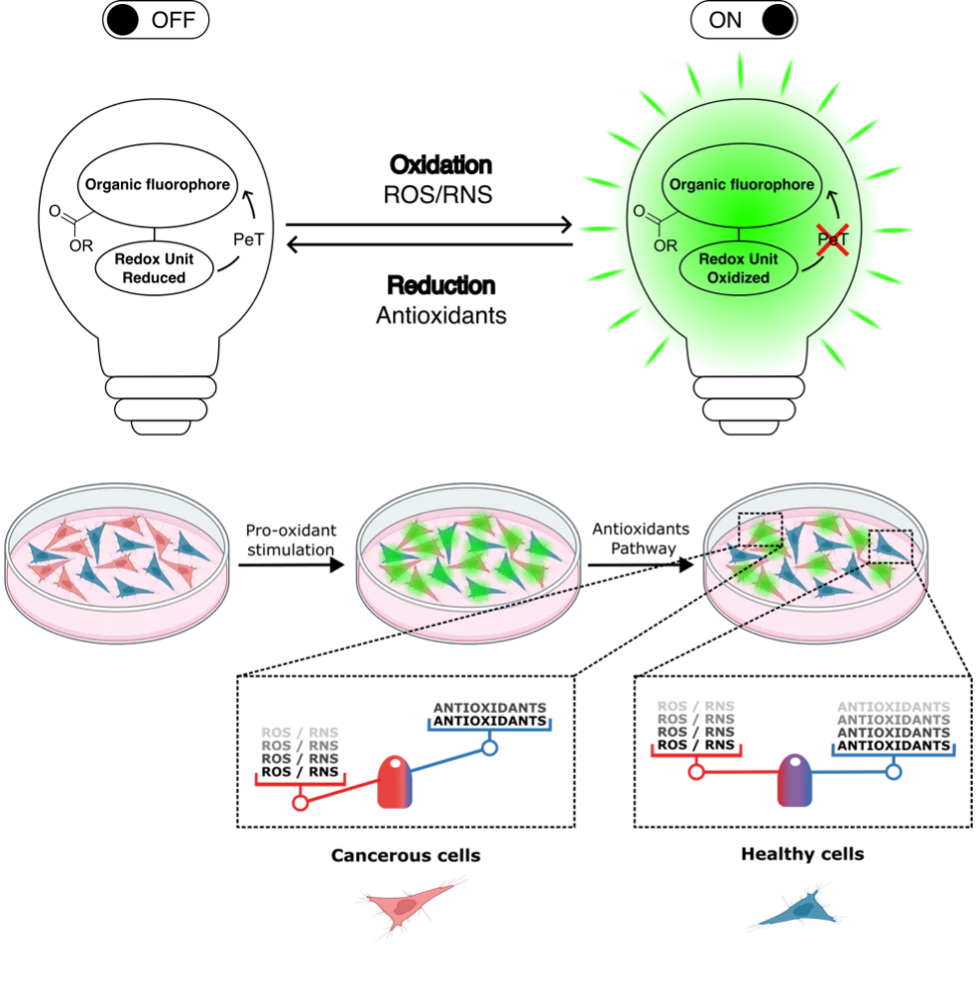
Reactive oxygen and nitrogen species (ROS/RNS) play a central role in cellular signalling, homeostasis, and stress responses, particularly in cancer. Despite their importance, tools capable of reversibly and reliably monitoring redox dynamics in living cells remain limited. This project addresses this gap by developing a new generation of biocompatible fluorescent probes designed for reversible detection of redox processes.
The probes combine well-established fluorophores derived from rhodamine and NBD (nitrobenzofurazan) families, offering a broad range of emission wavelengths with ferrocene-based metallocenes. These components enable photo-induced electron transfer (PeT) mechanisms that confer redox responsiveness and reversibility.
The project integrates probe design with a robotic cellular screening platform to evaluate probe performance in cancer cell lines (U-2OS, MCF-7, MDA-MB-231). The probe functionalizations aim at targeting specific intracellular compartments via the HaloTag TechnologyⓇ, enabling analysis of subcellular localization and membrane interactions through a lipidic anchor. Confocal microscopy will be used for live-cell imaging, supported by BioPhenics’s expertise in high-content screening.
Ultimately, this project aims at providing fully characterized reversible probes in cell mapping/imaging of cellular redox state and discrimination between healthy and cancer cells overexpressing ROS.
Teams involved
BioElectroAnalytical Chemistry - ENS-PSL
Eric Labbé
Olivier Buriez
Frédéric Lemaître
Bixente Carré